Our journey
From fish ponds back to mangroves
What began as replanting abandoned shrimp ponds has grown, phase by phase, into a reserve ready to welcome the public: from restoring the coast and teaching its children to welcoming visitors, creating village livelihoods and offering edutourism packages.
Phase 1 · Since 2017
Coastal restoration
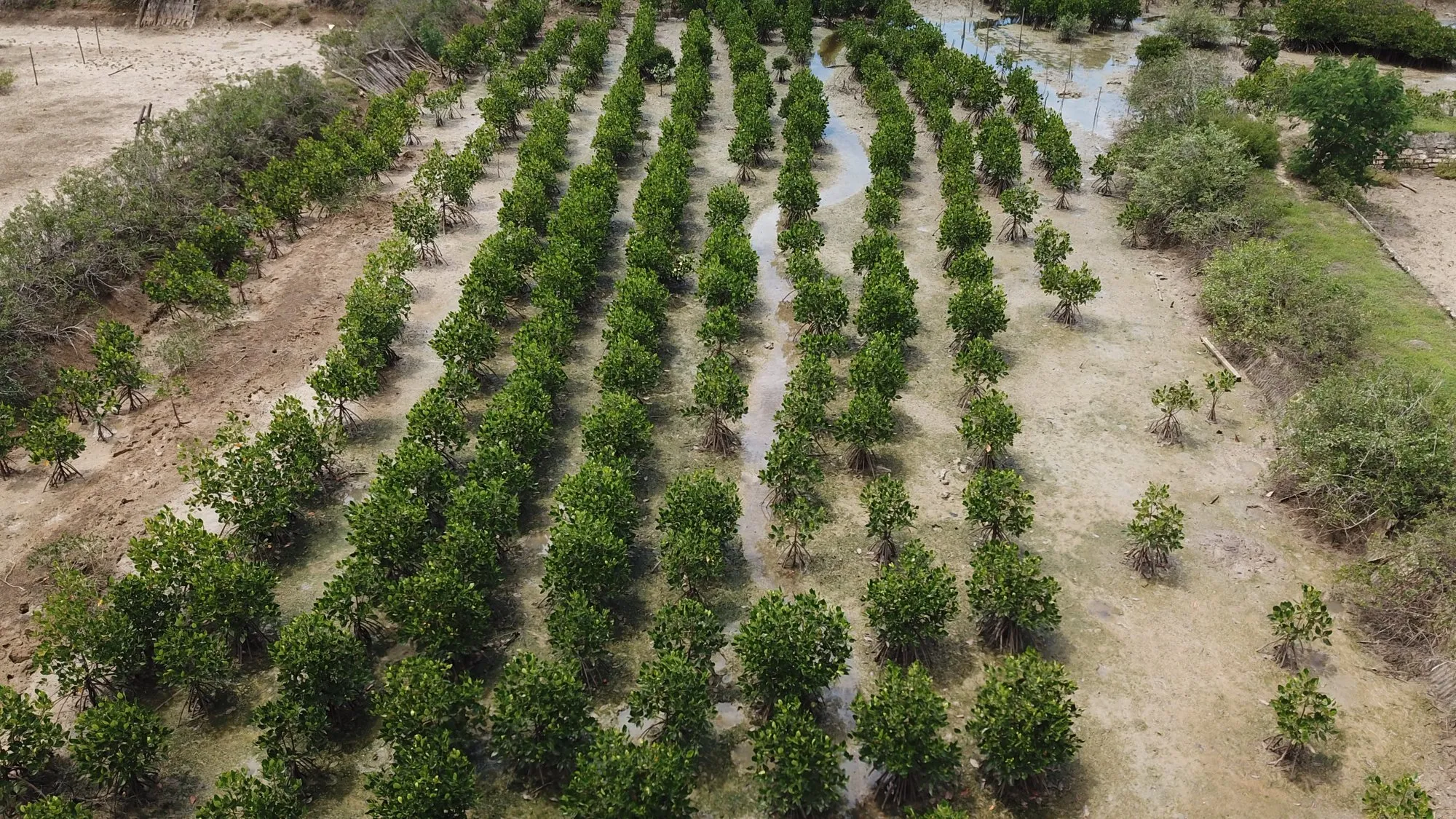
It all began with restoring the coast. Mangroves that had given way to shrimp ponds were replanted by villagers and protected by village rules.
-
2017
Villagers formed a mangrove group and began planting along the beach, former ponds and riverbanks.
-
2018–2019
Restoration spread to the coastal forest and seagrass beds.
-
2019
A village regulation set protected zones and banned cutting mangroves and hunting birds.
-
Today
Former ponds have grown back into dense mangrove forest, joined to the river, coastal forest, seagrass and coral reef.
Phase 2 · Since 2018
Mangrove Sister School
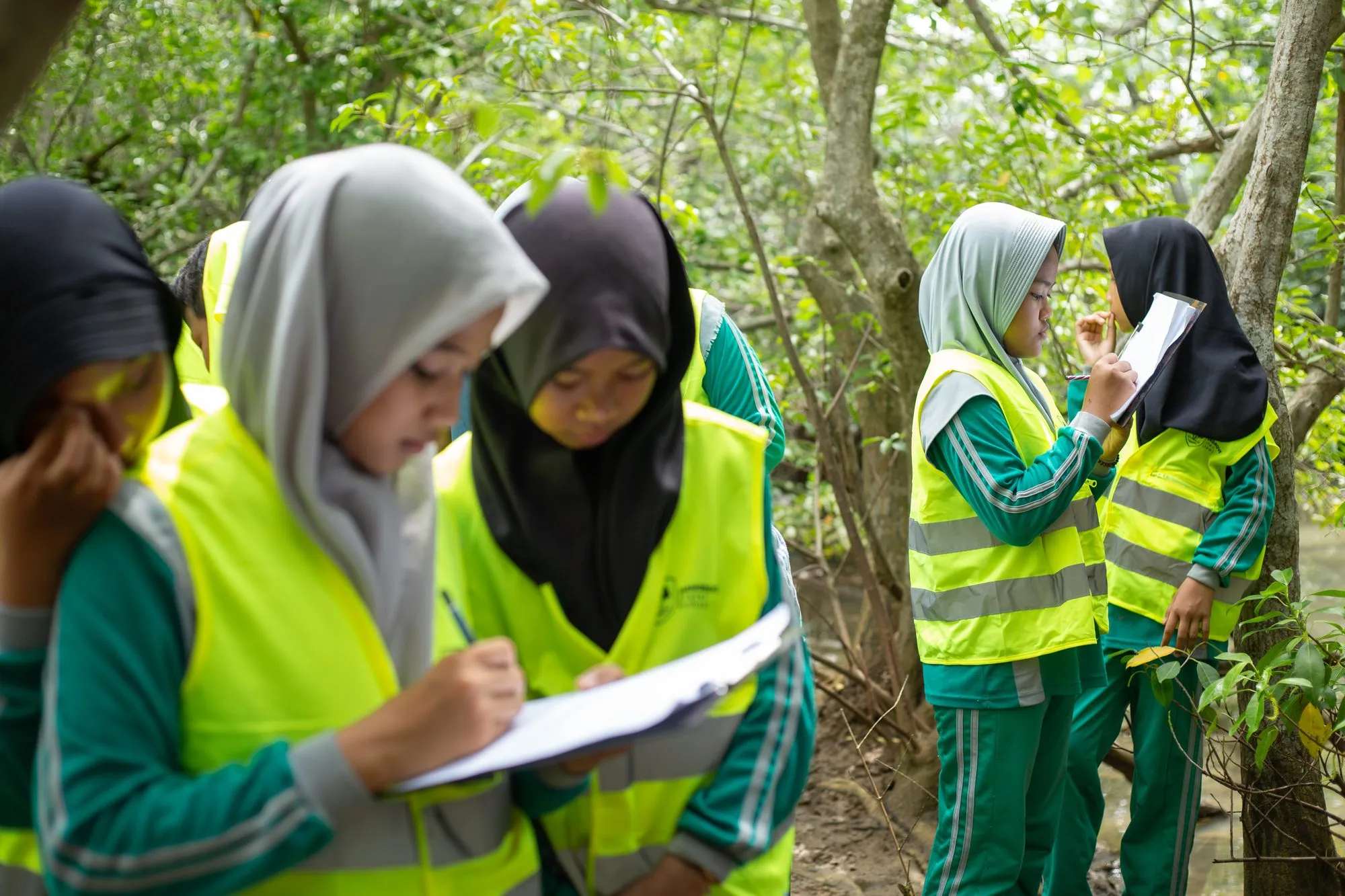
As the mangroves recovered, they became a classroom for schools around the reserve, so the next generation would help protect them.
-
2018
Began at Lembung Paseser primary school.
-
2020
Teachers were trained as environmental education facilitators.
-
2024–2025
Expanded to coastal schools across Sepulu district.
Phase 3 · Since 2019
Facilities for edutourism
So that people could come, learn and stay comfortably, the reserve gained facilities that sit lightly in nature.
-
2019
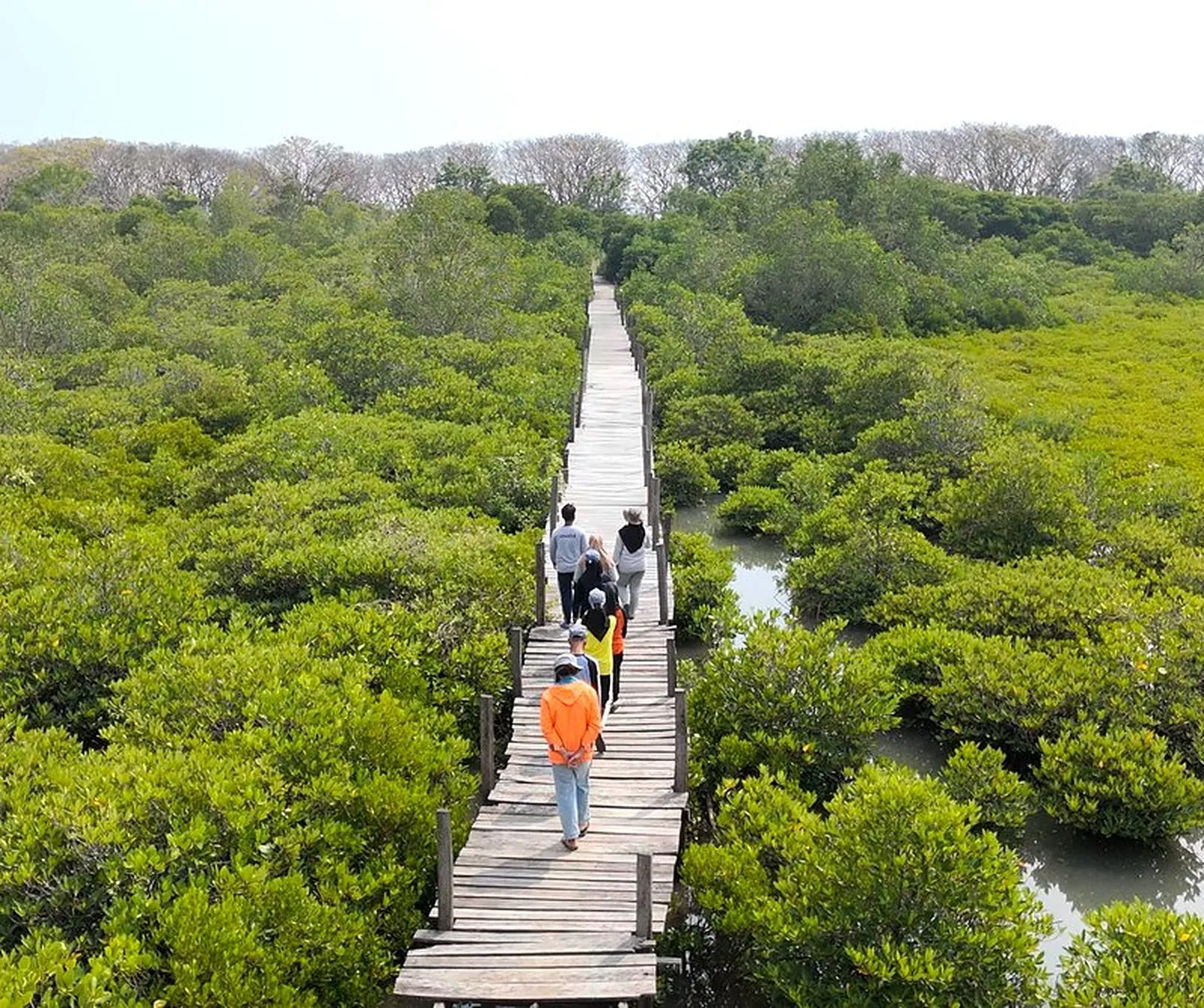
The first mangrove trail opened.
-
2020
The mangrove boardwalk was built as the gateway into the forest, and renewed in 2022.
-
Today
There is a boardwalk to the beach, an open-sided hall, wooden huts for overnight stays and a mangrove interpretation trail.
Phase 4 · Since 2023
Alternative livelihoods
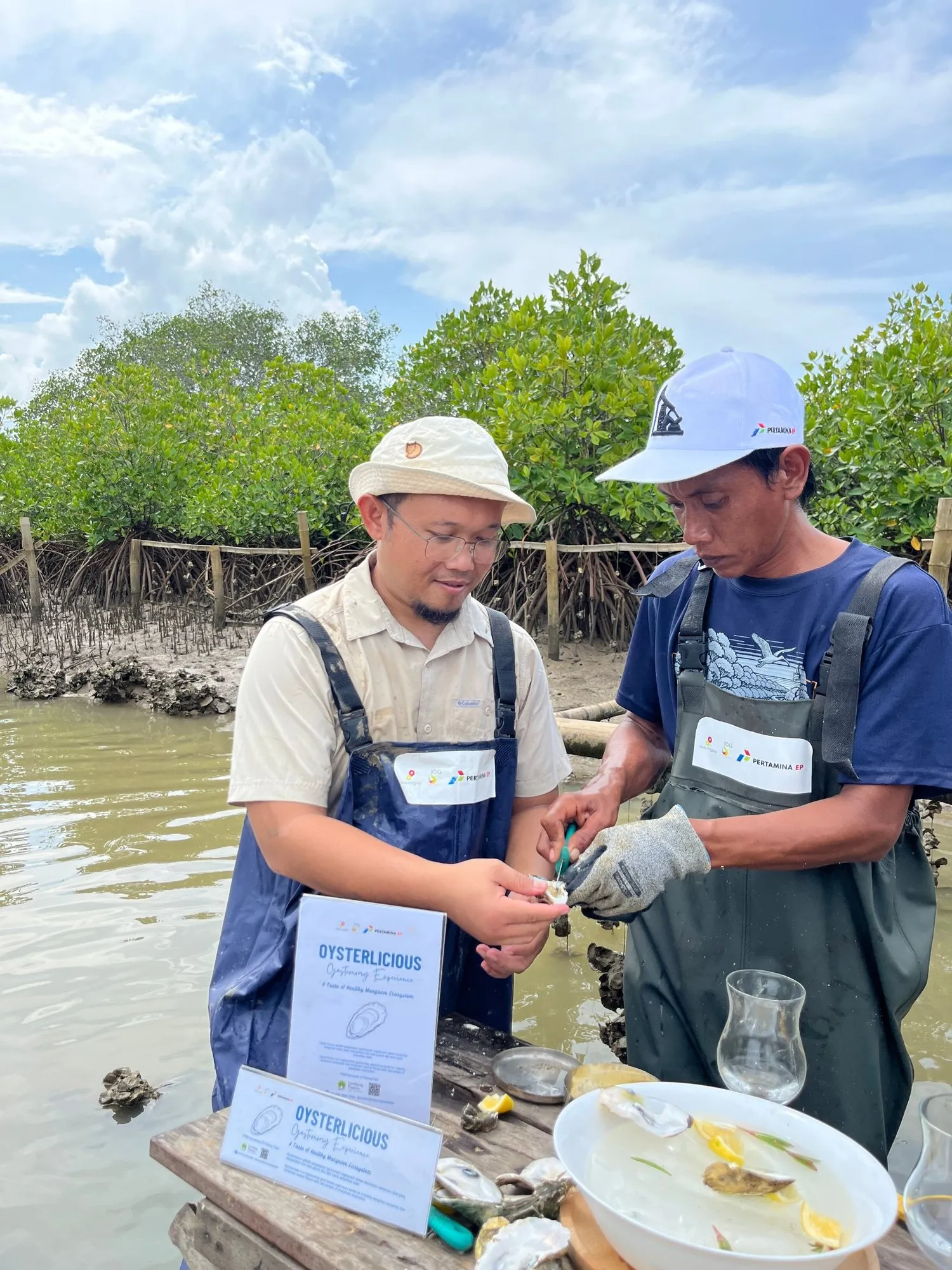
Healthy mangroves give villagers new livelihoods without cutting the forest, through oyster farming and beekeeping.
-
2023
An oyster farming group and Trigona beekeepers were formed.
-
2024
Village women became beekeepers, and oysters from the reserve were sampled and tested in a laboratory.
-
Today
Oysters and honey are village products that visitors can taste on site.
Phase 5 · Since 2025
Edutourism programmes and packages
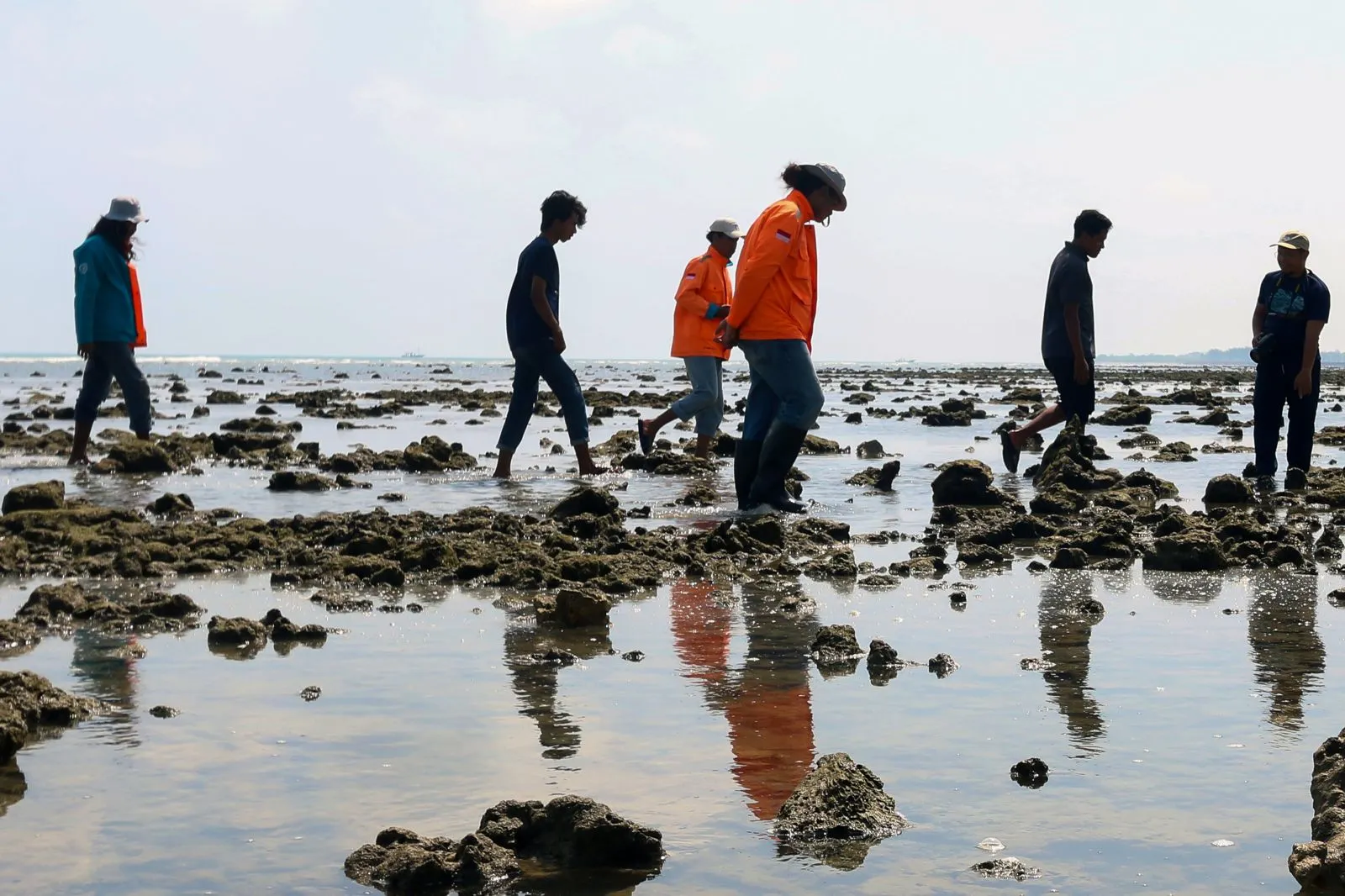
Restoration, schools, facilities and village products now come together as experiences anyone can join.
-
2025
The Ocean Literacy Program opened to the public, and Poleng Coral Week, the Eco-Maritime Youth Camp, Oysterlicious and Eco Camp & Stargazing were held for the first time.
-
2026
A photostory exhibition in Surabaya introduced Lembung Paseser to the public as a reserve ready to welcome visitors, and families came to camp for the Eco Family Camp.
Mangrove cover
Forty years of mangroves, seen from space
Satellite records show the mangroves around Lembung Paseser falling sharply at the end of the 1990s, when the ponds took over, to about 31 hectares. They slowly grew back, and since restoration began in 2017 they have kept expanding, to about 102 hectares in 2025.
Hover over or tap the chart, or focus it and use the arrow keys, to see each year.
Show the data as a table
| Year | Mangrove extent (ha) | Gained that year (ha) | Lost that year (ha) |
|---|---|---|---|
| 1985 | 75.3 | 0.0 | 0.0 |
| 1986 | 75.3 | 0.0 | 0.0 |
| 1987 | 75.3 | 0.0 | 0.0 |
| 1988 | 75.3 | 0.0 | 0.0 |
| 1989 | 75.3 | 0.0 | 0.0 |
| 1990 | 75.3 | 0.0 | 0.0 |
| 1991 | 75.3 | 0.0 | 0.0 |
| 1992 | 75.3 | 0.0 | 0.0 |
| 1993 | 74.6 | 0.0 | 0.7 |
| 1994 | 70.4 | 0.4 | 4.6 |
| 1995 | 71.9 | 1.5 | 0.0 |
| 1996 | 72.3 | 1.2 | 0.8 |
| 1997 | 74.0 | 1.8 | 0.1 |
| 1998 | 75.0 | 1.1 | 0.0 |
| 1999 | 31.3 | 2.7 | 46.4 |
| 2000 | 32.6 | 1.6 | 0.4 |
| 2001 | 32.3 | 0.6 | 0.9 |
| 2002 | 31.6 | 0.2 | 0.9 |
| 2003 | 31.0 | 0.2 | 0.7 |
| 2004 | 31.9 | 1.3 | 0.4 |
| 2005 | 34.5 | 2.8 | 0.2 |
| 2006 | 36.0 | 1.5 | 0.0 |
| 2007 | 38.1 | 2.1 | 0.0 |
| 2008 | 41.5 | 3.4 | 0.0 |
| 2009 | 49.8 | 8.4 | 0.1 |
| 2010 | 52.5 | 3.0 | 0.4 |
| 2011 | 53.9 | 2.3 | 0.9 |
| 2012 | 54.1 | 0.8 | 0.6 |
| 2013 | 54.9 | 0.9 | 0.1 |
| 2014 | 59.9 | 5.4 | 0.4 |
| 2015 | 70.4 | 10.7 | 0.1 |
| 2016 | 73.8 | 3.6 | 0.3 |
| 2017 | 77.2 | 5.1 | 1.7 |
| 2018 | 81.4 | 5.0 | 0.8 |
| 2019 | 86.6 | 6.0 | 0.8 |
| 2020 | 90.2 | 4.5 | 0.9 |
| 2021 | 95.2 | 5.2 | 0.3 |
| 2022 | 96.6 | 2.2 | 0.8 |
| 2023 | 97.7 | 1.5 | 0.4 |
| 2024 | 98.5 | 1.0 | 0.2 |
| 2025 | 102.1 | 3.7 | 0.1 |
Source: Global Mangrove Watch (mangrove habitat extent and net change, 1985–2025), for a mapped area around the reserve. Figures are satellite estimates and differ from the 2025 field mapping, which covers a wider area. globalmangrovewatch.org
Impact so far
A coast that people come to learn from
Universities that have studied and learned here
- Universitas Trunojoyo Madura
- Institut Teknologi Sepuluh Nopember
- Universitas Dr. Soetomo
- Universitas Merdeka Malang
- IKIP PGRI Madiun
Pupils, scouts, university students, families and community groups visit for field lessons, camps, research and public events such as Poleng Coral Week and the Eco-Maritime Youth Camp.
Be part of the next chapter
Bring your school, campus or family, or come to do research.